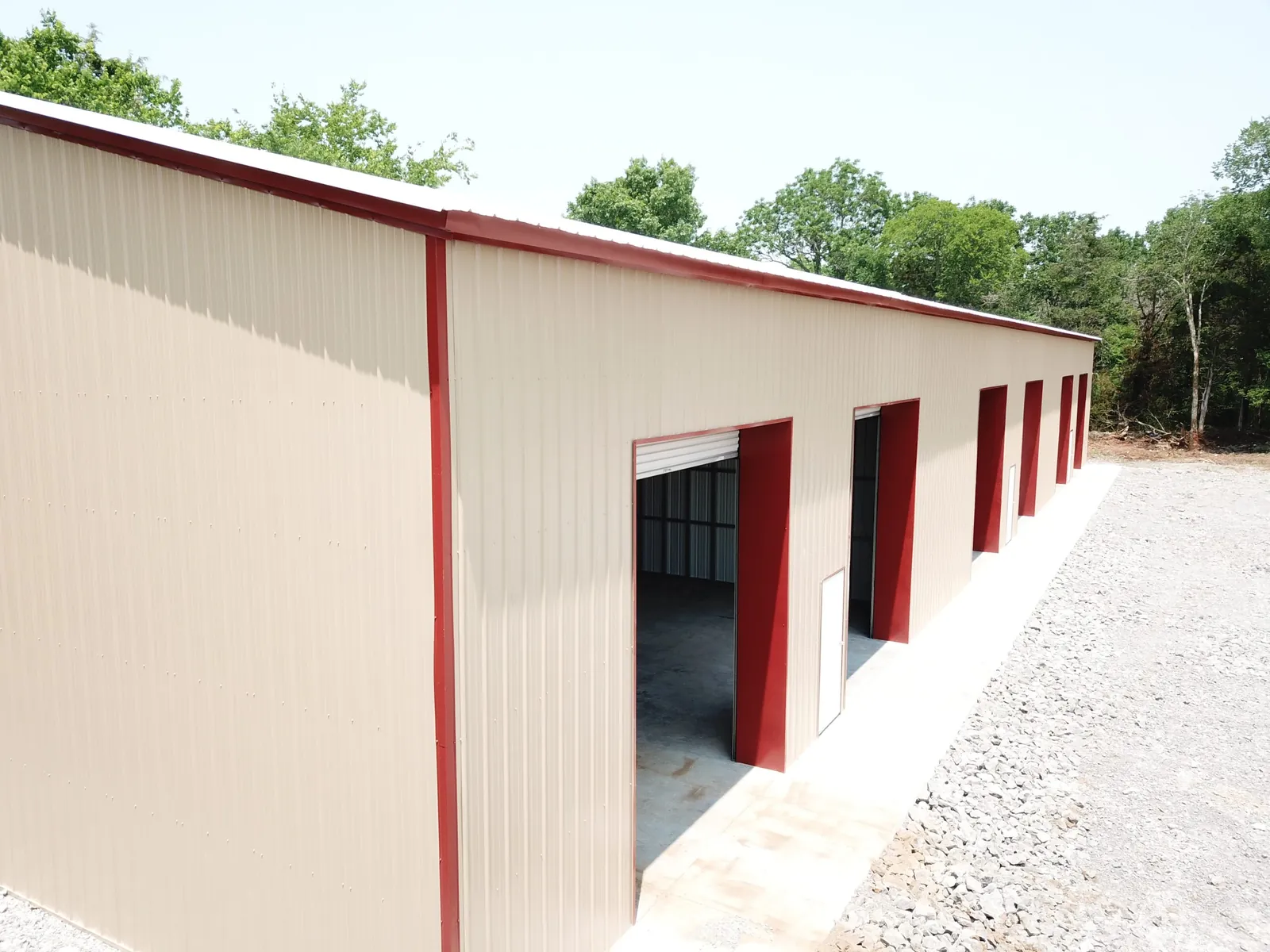
Metal Buildings Delivered in Mississippi & Tennessee

Compare all six steel building types by what they cover, how big they go and how much of them closes in.

Start With What Goes Inside

Advance Solutions LLC is an authorized dealer for every building on this page, and our job is to help you choose one and place the order. All six types share the same basic parts: a galvanized steel tube frame, steel roof panels, and your pick of roof style and color. What changes from one type to the next is how wide and tall the frame goes, and how much of it is closed in.

The quickest way to narrow it down is to start with the thing you are protecting. A bass boat and a pickup need open cover and a few feet of headroom. A tractor, a winter supply of hay and a stock trailer fit a barn layout with a tall center bay. A welding bench needs walls, a door that locks and room to work around it. A business that wants a wide, open floor belongs in the commercial line, which uses heavier framing.

Height catches people out more than width does. Side heights run up to 16 feet, so a camper with an air conditioner on the roof calls for an RV cover rather than a carport at a low setting. If you are torn between two sizes, think about what you will want to store over the next few years, not only this season. You can add onto an existing building from the same manufacturer later, so starting smaller is a fair choice when the budget is tight.

Not sure how ordering works or how to pay for it? The how it works page covers the order, site prep and install day, and financing and rent-to-own explains the ways to spread out the cost. Check the delivery area to see where installs happen.

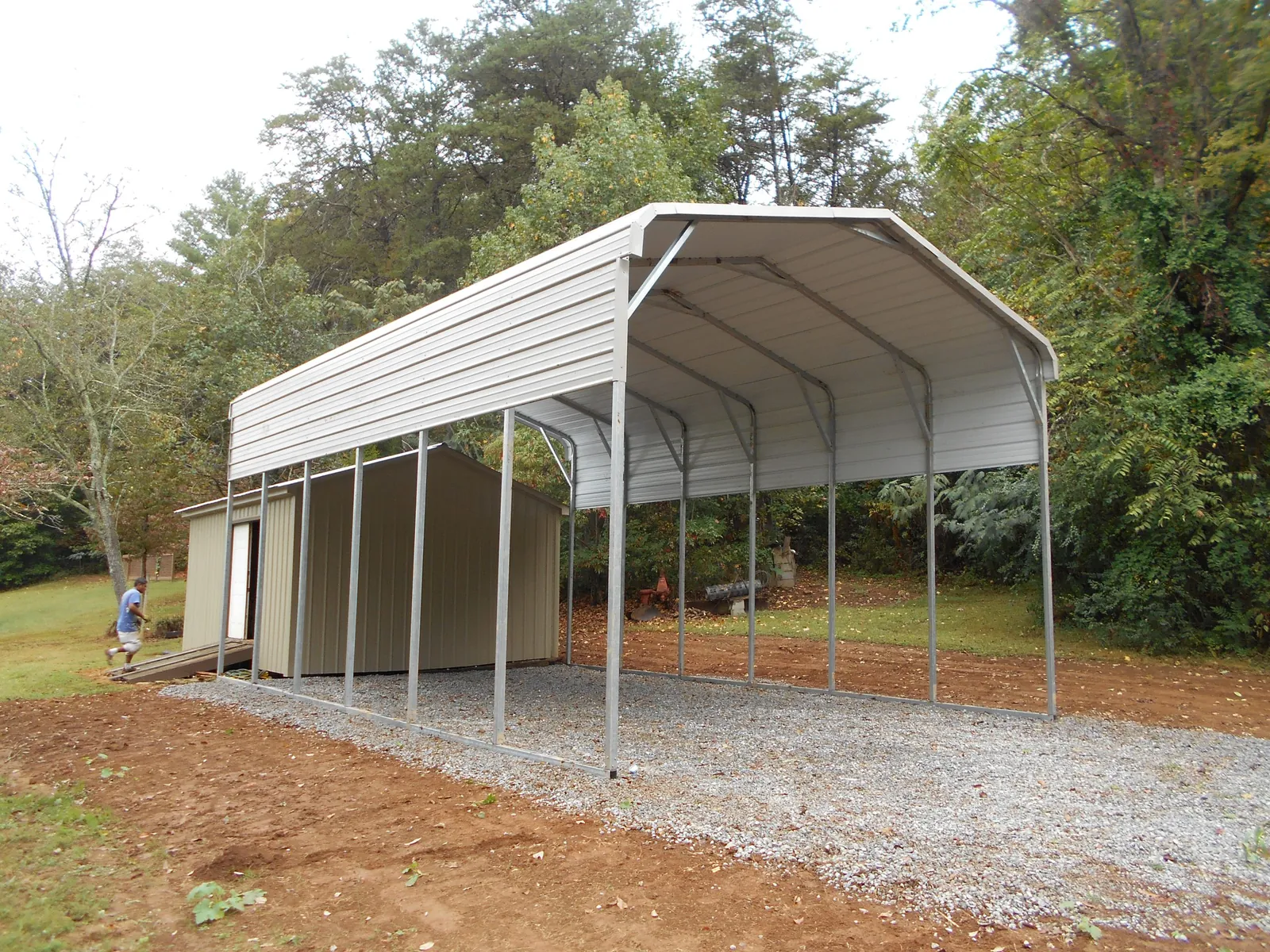
Side by side

Compare the Six Building Types

Typical uses, and the listed widths for each line. Your exact size gets set in the 3D designer.

Steel building types compared by use, enclosure and width
Building typeTypical useOpen or enclosedTypical widths
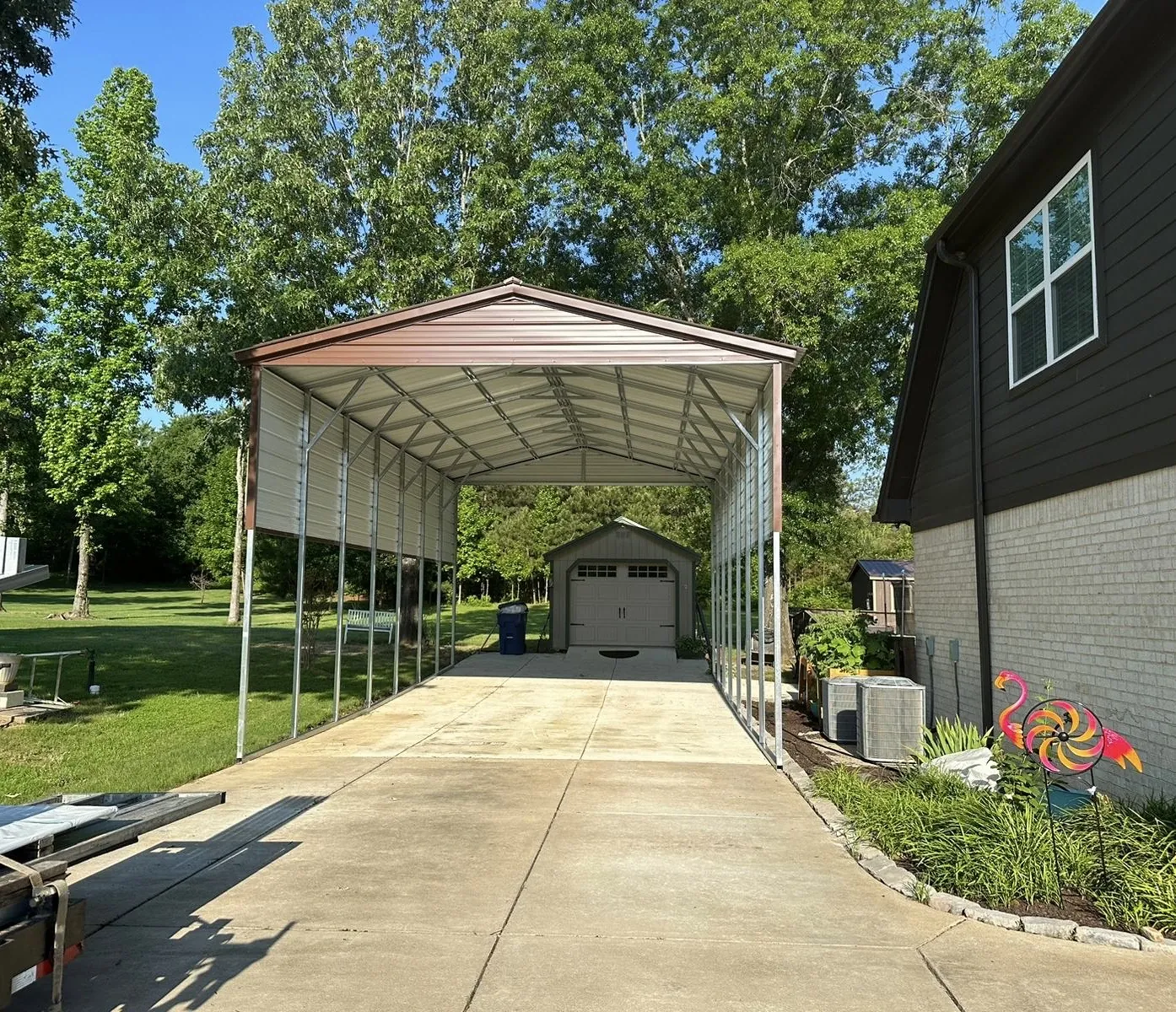
CarportCars, trucks, boats, small campers, a shaded outdoor work areaOpen, partly enclosed or fully enclosed12 to 30 ft
RV & boat coverRVs, pontoon boats, livestock trailers, heavy equipmentCover only, partly enclosed or fully enclosed12 to 30 ft, with 12 to 16 ft sides
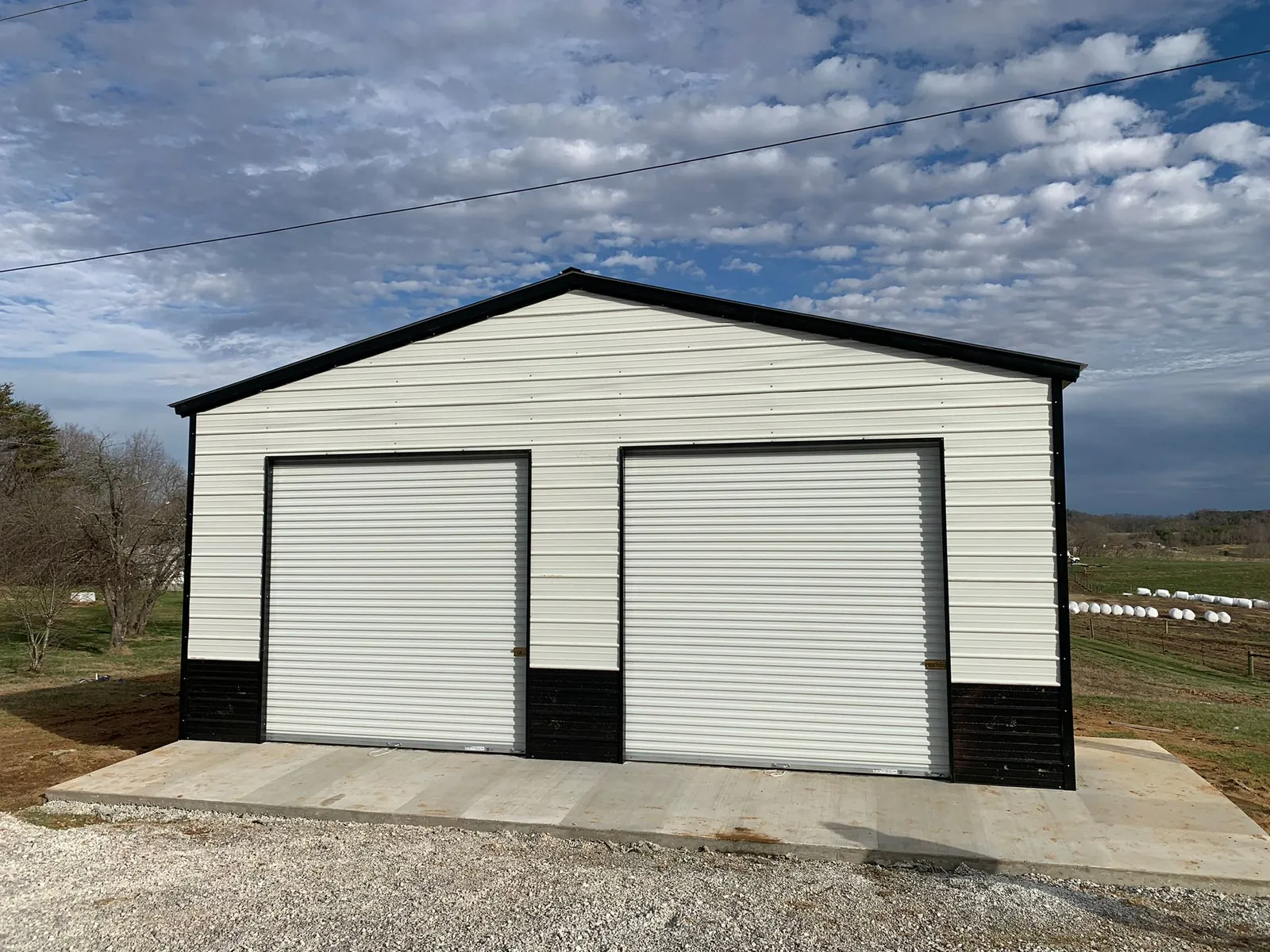
GarageVehicles and storage behind a locking doorFully enclosed12 to 24 ft
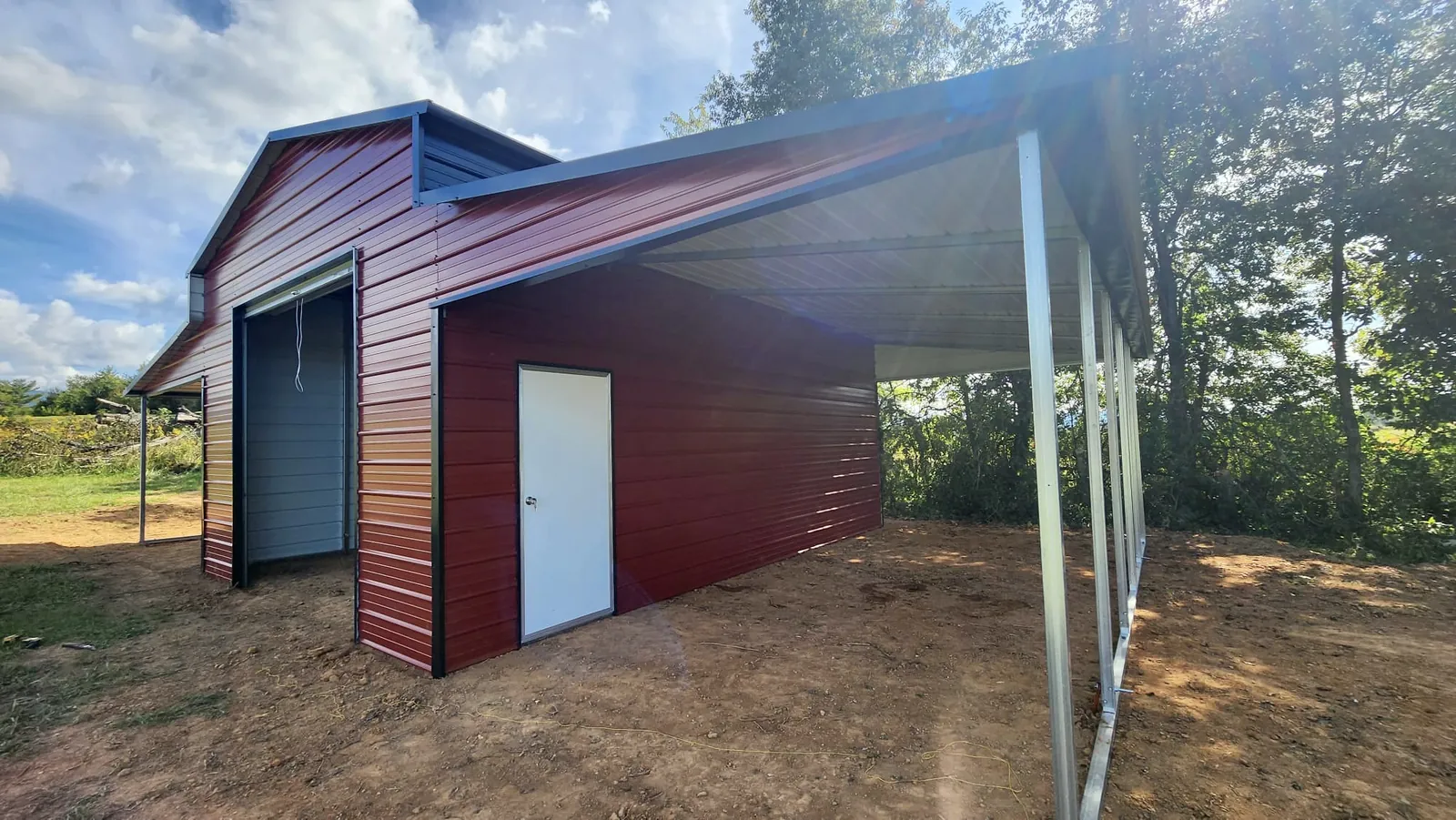
BarnTractors, hay, trailers and farm equipmentEnclosed center, with open or closed lean-tosSet by the barn model and lean-to sizes
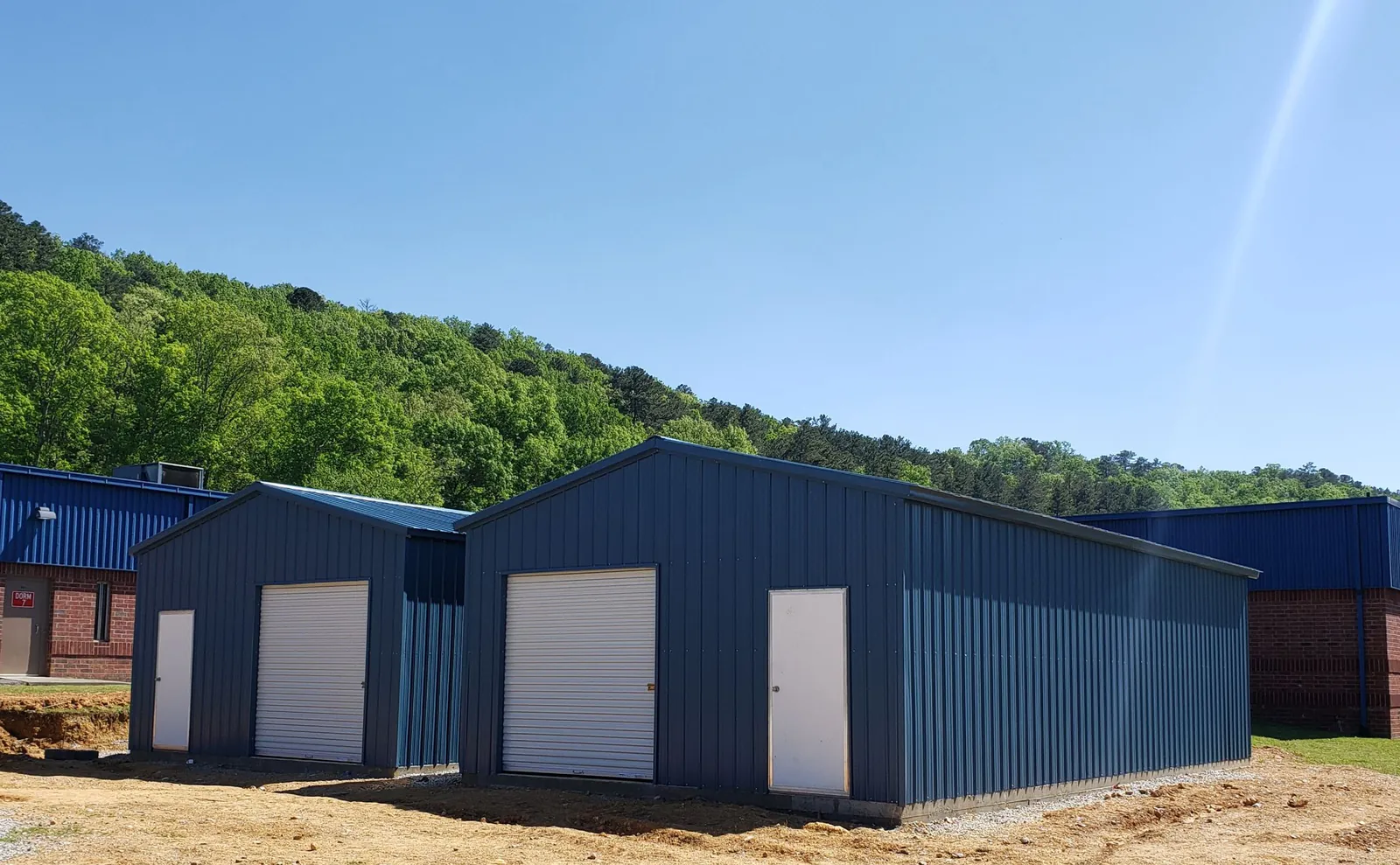
WorkshopRepairs, projects, tools and a workbenchUsually enclosed, lean-tos available12 to 30 ft
CommercialShops, small warehouses, storage, agricultural buildingsEnclosed, vertical roof requiredUp to 40 ft single span; industrial up to 60 ft

How to choose

When Two Types Both Seem to Fit

Most buyers end up deciding between two neighbors on the table above. Here is how to break the tie.

Carport or garage?

The difference is walls and doors. A carport is a roof on posts, the lowest-cost way to keep a vehicle out of the sun and rain. A garage closes all four sides and adds roll-up doors, so it locks. If security is not a worry, the carport is usually enough.

Barn or workshop?

A barn is a center building with lean-tos on either side, which suits farm use: the tractor in the middle, hay or a trailer on the sides. A workshop is one open room laid out around the work. If you mostly park and store, lean toward the barn. If you mostly fix, build or weld, pick the workshop.

RV cover or carport?

An RV cover is essentially a carport built tall, with sides from 12 to 16 feet. RV covers are made tall enough to add a lean-to later, so the camper gets the center today and the truck or the boat can go beside it next year.

Workshop or commercial?

Workshops are listed up to 30 feet wide. Past that, or when the building is for a business, the commercial line takes over with heavy-duty panels, heavier framing and engineered trusses. Every commercial building gets the vertical roof, and anything that wide sits on a concrete slab.

Every building

What Comes With Every Building

  • Engineer certification. A building installed on ground, concrete or asphalt is certified for the wind and snow loads that match its ZIP code. If your county wants drawings with the permit, engineer-stamped plans are available on request.
  • A manufacturer-backed warranty. Ninety days on workmanship from the install date, a 20-year limited rust-through warranty on panels and tubing, and 40 years on panels in a premium color. If something goes wrong, we will help you file the claim through the manufacturer’s warranty and claims page.
  • Nineteen colors. Fourteen standard colors at no extra charge, plus five premium colors that bring the longer panel warranty and color-matched screws.
  • Add-ons if you want them. Insulation, a condensation barrier, wainscot, eave lights, frame-outs, roll-up and walk-in doors, windows and lean-tos.
  • Delivery and installation. Part of the price once your site meets the install requirements, for buildings going up in Mississippi and Tennessee.

Metal Building Questions

What is the difference between a 14-gauge and a 12-gauge frame?

Gauge measures steel thickness, and the lower number is the thicker steel. The standard frame is 14-gauge galvanized tube, 2 1/2 inches square. The upgrade is a 12-gauge frame made from 2 1/4 inch tube.

What thickness are the roof and wall panels?

Panels are 29-gauge as standard, with 26-gauge panels as an upgrade. Each panel is 3 feet wide.

How wide and tall can a steel building be?

Carports and RV covers run 12 to 30 feet wide, garages 12 to 24 feet, and workshops 12 to 30 feet. Commercial buildings reach 40 feet in a single span, and industrial buildings go up to 60 feet of clear span. The tallest side height on offer is 16 feet.

Which building types need a concrete slab?

Wide ones. Buildings around 30 feet wide and up have to go on concrete. Narrower buildings can sit on level ground, gravel or asphalt. The install crew does not pour concrete or advise on it, so a slab is something you arrange with a concrete contractor before install day.

Can every building type get any roof style?

Regular, boxed eave and vertical roofs are offered across the line, and you choose one in the 3D designer. The one exception is commercial: every commercial building is built with a vertical roof.

Get a Free Building Quote

Tell us the size and where it is going, and we will help you design it, price it and get it on the install schedule.